Monday, January 31, 2022

Tezuka Osamu's Tales from the Old Testament, Ep10-12

In my blog post on the third set of episodes, I piously hoped that there wouldn't be a year gap again, as there had been between the second and third sets. In fact, it's been more than 18 months. The delay wasn't related to the pandemic. Rather, key staff members had been sidelined by personal issues. Now, with new staffing, the project has resumed, and Orphan is releasing the next DVD's worth of episodes.

Episode 10 ("Jacob's Family Reunited") brings Joseph's story (and the book of Genesis) to a close. The episode hews fairly closely to the Bible, with only a brief appearance by Rocco as another victim of the terrible famine sweeping Egypt and the rest of the Near East. All ends well. Joseph and his brothers are reunited, and Jacob moves the family to Goshen in Egypt. When he is near death, Jacob asks his sons to bury him in the family crypt in Canaan, but he allows them to remain in Egypt, where they will prosper... for a while.


Episode 11 ("The Birth of Moses") tells the story of Moses' birth and then attempts to fill out the Bible's bare-bones story of his upbringing. In this version, Moses' Hebrew origins are not a secret. However, his adoptive grandfather, the pharaoh, insists that Moses must choose between his ancestral roots as a Hebrew and his adoptive identity as an Egyptian. Rocco has a prominent role as Moses' pampered pet.
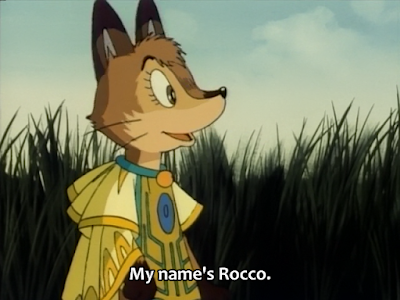

Episode 12 ("Fire in the Desert") recounts Moses' fateful journey to the slave cities of Pithom and Rameses. There, he is so overcome with anger at the treatment of a Hebrew slave that he kills an Egyptian overseer. He is forced to flee into the desert, where he marries Zipporah, the daughter of a shepherding family. After many years, he is drawn to the upper reaches of Mt. Sinai, where he encounters God in the form of a burning bush and is directed to free the Israelites from bondage. Rocco has a cameo during Moses' initial encounter with Zipporah.


New cast members include:

  • Genda Tesshou (Moses as an adult) played Colonel Muto in Joker Game, Moloch in Yondemasu Azazel-san, Rei in the Urusei Yatsura franchise, Moguro Fukuzou in New Laughing Salesman,  and "Oyaji" in Mitsuboshi Colors. He also played Jin Kiryu in Blue Sonnet, Zigong in Eiyuu Banka Koushi-den, Paul Rusch in Yume Kakeru Kougen, Jim Hyatt in AWOL Compression Remix, the loyal lieutenant Galbreath in Next Senki Ehrgeiz, the dragonman Baguda in Greed, the narrator in Akai Hayate and Meisou-ou Border, Dog McCoy in Dallos, Hebopi in Wild 7, rebel leader Oosukune in Izumo, Momo, the drummer in To-Y, and Rikiishi's trainer Kuroki and Kirishima in Eguchi Hisashi no Kotobuki Gorou Show, all Orphan releases.
  • Ino Manabu (Moses as a youth) appeared in Arc the Lad and Case Closed.
  • Okabe Masaaki (Pharoah during Moses' childhood) had featured roles in Legend of the Galactic Heroes and Sanctuary, an Orphan release.
  • Miyata Hikaru (Jethro) had featured roles in Naruto, Kyojin no Hoshi, and Heat Guy J, as well as a lead role in the notorious h-anime The Maiden Diaries
  • Takeguchi Akiko (Zipporah) appeared in The Alps Story: My Annette, The Book of Bantorra, and other shows.

Because the series is intended as a G-rated children's show, much of the tension of the Bible is lost. Exodus opens with a chilling and understated line: "Now there arose up a new king over Egypt, who knew not Joseph." The new ruler says, "Come, let us deal wisely with them," i.e., enslave and kill them. The biological son of Pharaoh is never named. He doesn't appear in the story of Moses' youth, and there is no rivalry between the two boys. I guess even Rocco didn't provide enough padding for the episode. Once the story reaches Mt. Sinai, it adheres more closely to the Biblical text.

New translator Nutella joined the team for these episodes; Skr translation checked episode 10 but then had to drop out. Yogicat timed. I edited and transposed Skr's original typesetting to these episodes. Nemesis, Topper3000, and Uchuu QCed. Skr encoded from Japanese DVDs.

A word on translation process and text. There are four possible sources: Nutella's translation; the Japanese closed captions; the English dub; and the Bible itself. When the episodes are inventing freely, the translation, cross-checked with the closed captions, has been used. However, when the episodes are adhering to the Bible, I have tended to interpolate from the Biblical text where appropriate. For example, when God calls to Moses from the burning bush, Moses responds in Japanese with a simple "Hai" (yes, okay, I will). I've transposed that to the Biblical response, "Here I am." You can consider either the Japanese line or my edit as another case of "lost in translation."

While I hope Orphan can finish the Exodus story (which runs through episode 17) in a timely fashion, there are no guarantees. Meanwhile, you can pick up this batch of episodes from the usual torrent site or from IRC bot Orphan|Arutha in channels #nibl or #news on irc.rizon.net.


Friday, January 7, 2022

Practice Makes Perfect (A-Girl v3)

You were probably not expecting (or needing) this: a fourth version of the 1993 shoujo OVA A-Girl. Well, practice makes perfect.

In 1992, Madhouse and Margaret Comics collaborated on an OVA of the shounen-ai romance Zetsuai 1989. This was successful, and in 1993, Madhouse issued six additional OVAs based on Margaret Comics properties:

  • Oshare Kozou wa Hanamaru
  • Singles
  • Pops
  • Oeda wa Nemurenai!
  • Kiss wa Hitomi ni Shite
  • A-Girl
Unfortunately, these additional OVAs were not successful and quickly sank into obscurity. None of them made it to laserdisc, let alone DVD.

A-Girl is based on a 1984 shoujo romance manga by Fusako Kuramochi. It tells a very simple story: girl meets boy, girl loses boy, girl gets boy. High-school student Mariko and her elder sister Mayu are forced out of their apartment by a fire and move in with their landlord. Mariko meets the landlord's handsome son, Natsume, who is also a model. They fall in love but break up when Mariko discovers that Natsume is seeing other girls. Eventually, they are reunited, and the end credits roll.

A-Girl has had a fairly twisted release history. The first raw we found, back in September 2016, was defective: small (512 x 384) and missing the end credits. Apparently, it was stitched together from three pieces on YouTube. It was released as v0. The second raw, from 2017, was based on a used VHS tape purchased in Japan. It wasn't perfect either. Tape stretch caused noticeable audio distortion in three places, but at least it was complete. It formed the basis of v1. In late 2017, Intrepid realized that the audio distortion could be overcome. He made a new audio track, and I spliced the new track over the old one in the three chapters that were broken, creating v2.

Subsequently, Intrepid made significant improvements in his VHS ripping capability, setting up an uncompressed capture system based on antique computing equipment. This worked well and allowed for significant improvements in video quality. However, the audio issues in A-Girl made me shy away from ripping it again. Then, the entire capture setup was felled by hardware issues.

Recently, Intrepid bought another antique computer and a new VHS deck. He decided to revisit A-Girl, because his earlier rip suffered from color distortion. Happily, the new rip is free from both color distortion and audio issues. The encode looks distinctly better. Finally, here is a release that is complete (v1), free of audio distortion (v2), with proper colors (v3).

Here's a frame from v3, and below it, the same frame from v2:

A-Girl was the directorial debut of Kousaka Kitarou. (He also did the character designs.) He later worked for many years as an animation director and key animator on Ghibli films before achieving prominence as the director of the award-winning Nasu: Anadalusia no Natsu. For A-Girl, he chose a novel approach: he made a "silent movie." A-Girl has minimal dialog and is performed against a background of Japanese pop songs composed by Okada Tooru and sung (in English!) by SEIKA. (I think she does Mariko's six lines of dialog, too.) Dialog placards provide continuity, as in old silent films. It works pretty well and doesn't interrupt the flow of the story.

Iri bought the VHS tape for this release.He also translated and timed. I edited and typeset, Nemesis and Eternal_Blizzard did QC, and Intrepid ripped and encoded. For this release, Iri corrected a couple of signs, I tweaked line breaks for more consistent display across video players, and Uchuu and Topper3000 release checked.
 
You can get this latest, and I sincerely hope the last, version of A-Girl from the usual torrent sites or from IRC bot Orphan|Arutha in channels #nibl or #news on irc.rizon.net. If you like the music, the soundtrack is available as well, in glorious FLAC audio.

Saturday, January 1, 2022

2021 in Review

The world continues to go to hell in a handbasket. The pandemic continues to rage. The world supply chain is borked. Inflation is rampant. Windows 11 is out. In spite of all these disasters, Orphan Fansubs has soldiered on, and a lot of projects got done. This was almost a record year in terms of number of projects, although not in terms of released files, because there were no series at all, only OVAs, movies, and TV specials. Well, variety is the spice of life.

In addition, there has been a deliberate effort to clean out accumulated cruft. As a result, Orphan released a fair number of raws that are unlikely to be translated and restarted a few projects that seemed hopelessly stalled.

Orphan Fansubs

Orphan's projects for 2021 were:  
  1. Milky Passion: Dougenzaka - Ai no Shiro. A quirky rom-com set in a love hotel.
  2. Nine: Original-ban HD. Adachi Mitsuru's early baseball series, in high-definition.. 
  3. NIne 2: Koibito Sengen HD. Second episode.
  4. Nine: Kanketsuhen HD. Third episode.. 
  5. Chiisai Sensuikau ni Koi wo Shita Dekasugira Kojira no Hanashi (The Tale of the Ginormous Whale That Loved a Little Submarine). A Sensou Douwa special, about an oversized sardine whale that mistakes a small sub for a potential mate, with results that are first comic and then tragic..
  6. Coluboccoro 2019. An expanded version of a rather standard eco-fantasy tale..
  7. Ohoshi-sama no Rail. A story about Japanese colonists in Korea and their flight to safety at the end of World War II.
  8. Megami Paradise. Valiant shrine maidens battle dark goddesses to save Paradise. Most notable for its frequent pantsu shots..
  9. The Green Cat (Midori no Neko) v2. The first Lion Book OVA, based on a sci-fi tale by Tezuka Osamu, about a lonely boy's dangerous companion: a green cat.
  10. Rain Boy (Amefuri Kozou) v2. The second Lion Book OVA, about a lonely boy's imaginary companion: an animate umbrella.
  11. Lunn Flies into the Wind v2 (Lunn was Kaze no Naka). The third Lion Book OVA, about a lonely boy's imaginary companion: a pretty girl on a coffee poster.
  12. Yamatarou Comes Back v2 (Yamatarou Kaeru). The fourth Lion Book OVA, about a lonely bear cub's unusual companion: a steam locomotive..
  13. MAPS: Densetsu no Samayoeru Seijin-tachi. A "wide-screen baroque" sci-fi yarn about a boy who is supposedly a living map to an enormous treasure.
  14. Call Me Tonight. The first Pink Noise OVA, a sci-fi yarn about a young man who becomes a literal monster when he's sexually aroused.
  15. Tabi Suru Tobi Neko. Live action segments about cats playing, sleeping, eating, and generally ruling the roost..
  16. Boku no Boukuugou (My Bomb Shelter). A Sensou Douwa special, about the long-term trauma war can impose on children..
  17. Gude Crest. A sword-and-sorcery flick feature two powerful women warriors.
  18. B.B. Fish. Set in the world of diving, both free and scuba, this beautiful short OVA is better appreciated for its images than its plot.
  19. Hashire! Shiroi Ookami. A young boy tries to guide his pet wolf to safety in the wilds of rural Wisconsin in the 1950s.
  20. Sangokushi Daiichibu Eiyuu-tachi no Yoake HD. The first movie covers the period from the start of the Yellow Turban rebellion to the death of Lu Bu.
  21. Maris the Choujo. This sci-fi OVA, about the perils of being a Girl of Steel in a Kleenex world, is a hoot from start to finish.
  22. Blue Sonnet. ESPers with strong psychic powers battle for supremacy and survival.
  23. Kaitei 3-man Mile HD. A Toei "all ages" movie about conflict between the underground and undersea kingdoms.
  24. Kasei Yakyoku v2. A melodrama for adults, about life and love in Taishou Japan.
  25. Kiku-chan to Ookami. A Sensou Douwa special. A Japanese girl and her family, fleeing after the fall of Machuria, become separated. The girl is succored by an elderly she-wolf.
  26. King Fang. The offspring of an escaped European wolf and a Japanese hunting dog must fight for survival and supremacy in the wilds of Hokkaido..
  27. Tobira o Akete. Three Japanese ESPers are mysteriously transported to a fantasy world, where they campaign to liberate an oppressed people.
  28. Chameleon ep3. More adventures of pint-sized wannabe hood Yazawa Eisaku.
  29. Kageyama Tamio no Double Fantasy. A "double feature" of fantasy tales, one comedic, one horrific..
  30. Sangokushi Dai Ni Bu Choukou Moyu! HD. The second movie covers the period from the falling out between Cao Cao and Liu Bei to the Battle of Red Cliffs..
  31. To-Y HD. A story about the lead singer in an indie band, who is trying to balance girlfriends, his career, and life in general.
  32. Cat-Eyed Boy (1976) ep 1. The first episode of Umezz Kazuo's horror series. This is a "one-off"; Orphan is not subbing the rest of the series.
  33. Shin Takarajima. A very early Tezuka Osamu anime, retelling Treasure Island with animal characters..
  34. Sangokushi Dai San Bu Harukanaru Taichi HD. The third movie covers the period from Liu Bei's expedition to Shu to the death of Kongming..
  35. Mother: Saigo no Shoujo Eve. A sci-fi movie about the extraterrestrial origins of humanity..
  36. Alice in Cyberland 2. The second episode of what I thought to be a one-and-done OVA..
  37. Bakumatsu no Spasibo. The story of the first Russian expedition to modern Japan..
  38. Yuki 1080p and 720p. A fantasy about a young snow goddess' visit to an impoverished village in rural Japan and her efforts to better the lot of the villagers. 
  39. Aoi Hitomi no Onnanoko no Ohanashi (The Tale of the Blue-Eyed Girl). A Sensou Douwa special. A young girl, offspring of a Japanese woman and an American man, relocates to the countryside during the closing months of World War II, where she encounters both prejudice and friendship.
  40. Chameleon ep4. Yazawa Eisaku marches on, to no great effect.
One personal highlight was finishing the Sensou Douwa series; the specials are an important body of work, expressing anti-war sentiment that is increasingly rare in Japanese political circles. Another was subbing Shin Takarajima, the earliest Tezuka Osamu show that Orphan has done. Other personal favorites included Maps, Double Fantasy, and Yuki, and among the resubs, Call Me Tonight, B.B. Fish, Maris the Choujo, To-Y, and the Lion Book OVAs.

A big shout-out to Intrepid for his ongoing work in media acquisition, transcription, and encoding. I also want to thank the Arutha foundation, which has hosted all of Orphan's releases on IRC. On a sadder note, Erik of Piyo Piyo Productions has dropped out of the fansub scene. He is sorely missed.

The Audio Side

Orphan released some additional music this year. The sources were CDs and were ripped by Intrepid.
  1. Haruka Naru Toki no Naka de 3 - Owarinaki Unmei OST (FLAC)
  2. B.B. Fish OST (FLAC) 
  3. Bakuen Campus Guardress Music Collection (FLAC)
Work for Other Groups

Much the same.
  • Frozen-EviL. I continued to edit the Blu-Ray version of Yawara! The project reached a significant milestone by getting to episode 59, where the FroZen-EviL DVD project began.
  • Saizen. I continued to edit and typeset Laughing Salesman. It too reached a significant milestone, with the entire TV series released in HD and batched. Many (too many) specials remain.
  • Soldado. All the Ninku TV shows are released, but there are some bits-and-bobs still to be done.
  • Inka. I typeset a few shows, to thank that team for their help on our joint projects.
  • CPP. I edited a few episodes of Manga Sekai Mukashi Nanashi.
 At the pace some of these series are going, I wonder if I'll be around to see the end...

Favorites of 2021

I'm not an anime critic, so I don't try to compile a "best of" list for the anime year. Instead, I'm listing my favorites of the year and why they kept me interested all the way through.

In alphabetical order:
  • Blue Period. Great drama, marred only by Netflix' delayed English release schedule.
  • Godzilla S.P. - great hardcore sci-fi, and the first NetFlix anime series I've actually been able to watch all the way through.
  • Horimiya - a wonderful modern rom-com, with terrific chemistry between the leads. Too many side characters; it needed more ruthless pruning or a longer run-time.
  • Kai Byou Ramune - a quirky supernatural tale. The stresses of modern life express themselves as mystery diseases, which the equally mysterious Dr. Ramune treats.
  • Kemono Jihan - an intense supernatural tale, which held me enthralled throughout, despite the high amount of violence.
  • Kobayashi-san no Maid Dragon S2 - a feel-good comedy and a welcome antidote to the real world. There was more emphasis this time on Kobayashi-san's entourage as a family.
  • Mairimashita! Iruma-kun S2 - another feel-good comedy with some serious thoughts on its mind. A shounen in disguise, but the disguise is more than good enough for me.
  • Non Non Biyori Nonstop (S4) - yet another feel-good comedy. The comedy is gentle and character-driven. Is it different from the previous seasons? No, but it doesn't need to be.
  • Shinigami Bocchan to Kuro Maid - another romantic comedy, with somber overtones. The CGI is off-putting, but the story is gripping. Continued next year.
  • Super Cub - a coming-of-age story that's an homage to motor scooters. There's not much drama (when it happens, it seems forced), but the heroine's growth and development are presented well.
Ousama Ranking would have been my number one choice, if it had actually finished this year. Regardless, Bojje and Kage win Couple of the Year.

The year included more than its fair share of guilty pleasures and over-the-top ecchi-fests, but I'm not going to admit to watching any of them, now am I?

Looking Ahead

More than half of Orphan's 2021 releases are resubs, either of our own shows or of other groups' work. Three factors account for this. First, Orphan is short of translators and, in particular, translation checkers. That hampers the team's ability to do original projects. Second, new, higher quality source material keeps appearing. That makes it tempting to revisit past projects that suffered from second-rate (or just lower resolution) video sources. Finally, the analog ripping technology continues to improve. This provides better encodes from seemingly hopeless source material.

Another driving factor is time. I'll be ransacking the back catalog - and Orphan's backlog - to find shows that the team can bring to a conclusion in a timely fashion. After all, I'm turning 75 in 2022, and I need to get a move on.

So Orphan Fansubs will continue to work on The Shows That Time Forgot, with a focus on movies, OVAs, and short series. There's no shortage of good material, and interesting raws are more abundant than ever; but qualified staff is in short supply. If you're a translator, encoder, editor, typesetter, or QC with an interest in the back catalog, please get in touch with me on irc.rizon.net. I even show up on Discord occasionally, under duress.

Thanks, everyone - both team members and fans. Have a happy and safe 2022.

Wednesday, December 29, 2021

Chameleon 4

What's this? Two episodes of Chameleon in the same calendar year? Is Satan gliding around his domain on ice skates?

In the blog post for episode 3, I opined hopefully that the series would be stalled indefinitely, because the songs for the last three episodes hadn't been translated and were unlikely to be. However, ninjacloud, the timer, refused to give up. He nudged and pleaded with various translators to get the songs done. Further, VigorousJammer did the detailed work of applying laalg's complex translation checks to Moho's scripts. So now, I'm out of excuses.

Episode 4 ("The Worst One-on-One Hell Ever!!") continues the saga of pint-sized wannabe hood Yazawa Eisaku. Having survived three near-death encounters, first with the Shadow Dance gang, then with psychotic thug Kyuu Akio, and finally with the ultra-violent Matsudo gang and its murderous leader, Matsuoka Eiji, the story continues with further interactions among Yawaza and his gang, Matsuoka and his gang, the ultra-powerful fighter Mishima Jun, and even Kyuu, who had been consigned to Juvenile Detention at the end of episode 2. The episode doesn't break new ground or introduce new characters. It's an extension of the previous episode and ends pretty much like episode 3 did. In short, it's filler.

Episode 3 ended with both Matsuoka and Mishima badly injured and recuperating. Matsuoka baits a trap by offering Yawaza "compensation money" for Mishima's injuries. Yawaza knows it's a trap but, opportunistic lowlife that he is, he's still unable to resist the lure of cash. When Mishima finds out (as Matsuoka intended), he's convinced that Yawaza has betrayed him (as Matsuoka also intended), Mishima comes after our "hero" with murder on his mind. Then Matsuoka comes after both of them. Only Kyuu's last minute intervention saves everyone from a fiery - and permanent - conclusion.

Moho Kareshi did the initial translation; laalg translation checked. convexity translated the songs and thus unjammed the project. kokujin-kun filled in a few blanks. ninjacloud timed. I edited and typeset; VigorousJammer provided valuable assistance by applying the translation check. Nemesis and Uchuu did QC. The raw is an ancient Internet rip (DivX505!), but there are no signs of original media on the second-hand market in Japan.

I still find Chameleon tedious in every respect - to edit, to typeset, or even to watch. Nonetheless, the team has put in a lot of hard work to get to this point. I owe it to them, and to the series' devoted fans (are there any?), to finish it... next year. Maybe. On the other hand, the next two episodes have many missing lines and NO TRANSLATOR. Mwahahaha...

So I'll refrain from further comments; you could guess what they'd be. You can get Chameleon 4 from the usual torrent site or from IRC bot Orphan|Arutha in channels #nibl or #news on irc.rizon.net.


Thursday, December 23, 2021

Sensou Douwa: Aoi Hitomi no Onnako no Ohanashu

Sensou Douwa (War Tales or War Fables) was a series of TV specials by Shin-Ei Animation that ran annually from 2002 to 2009. In chronological order:

  • 2002    Umigame to Shounen (The Boy and The Sea Turtle)
  • 2003    Tako ni Natta Okaasan (The Mother Who Became a Kite)
  • 2004    Chiisai Sensuikan ni Koi o Shita Dekasugiru Kujira no Hanashi (The Tale of the Ginormous Whale That Fell in Love with a Little Submarine)
  • 2005    Boku no Boukuugou (My Air Raid Shelter)
  • 2006    Yakeato no, Okashi no Ki (The Cake Tree in the Ruins)
  • 2007    Futatsu no Kurumi (Two Walnuts)
  • 2008    Kiku-chan to Ookami  (Kiku-chan and the Wolf)
  • 2009    Aoi Hitomi no Onnako no Ohanashu (The Tale of the Blue-Eyed Girl)

Orphan has already released The Boy and the Sea Turtle, The Cake Tree in the Ruins, The Mother Who Became a Kite, The Tale of the Ginormous Whale That Fell in Love with a Little Submarine, My Air Raid Shelter, and Kiku and the Wolf. Today, we're releasing Aoi Hitomi no Onnako no Ohanashu (The Tale of the Blue-Eyed Girl). Saizen has already done Two Walnuts, so the series is completely translated.

Aoi Hitomi no Onnako no Ohanashu is a departure from the most of the Sensou Douwa series, both in source material and in tone. It's not based on a short story by Nosaka Akiyuki. Instead, it's an original screenplay by Fujimoto Nobuyuki, who penned scripts for children's shows such as the original Doraemon and Bosco Adventure, as well as the adaptations of three earlier Sensou Douwa shows. As a result, it's a lighter episode than some of the previous specials, and it has a relatively happy ending.

Like the other episodes, Aoi Hitomi no Onnako no Ohanashu is set in World War II Japan. Although the time-frame isn't specified, the story is set after the firebombing of Yokohama (April, 1945) - the last five months of the war. Kudo Eiko, a grade-school girl, and her mother have fled to the relative safety of the countryside. When Eiko is introduced to her rural classmates, they are all struck by one thing. She has blue eyes, which most of them have never seen. (One asks, "Did she paint them?") They are horrified to discover the reason. Eiko is the daughter of an American man and a Japanese woman. Her father was sent back to the United States at the outbreak of the war. Eiko and her mother remained in Japan.


Most of the school kids have absorbed the lessons of Japanese propaganda - that Americans are savages - and they shun and bully Eiko. But one boy, Kenta, doesn't agree. He befriends Eiko and brings her into his group of friends, Norio, Tarou, and Shunsuke. This goes reasonably well until Norio's dad returns from the war, horribly wounded, with the news that Norio's older brother has been killed. Everyone except Kenta turns against Eiko. Then, Kenta and Eiko are both orphaned in an air raid. Kenta must go live with distant relatives, and Eiko will be interned by the Military Police as an enemy alien, even though she's a Japanese citizen. This terrible prospect brings the boys, and the rest of the class, to their senses. With help from his friends, Kenta hatches a plan to save Eiko and himself from their fates.

The show contrasts the attitude of Kenta, his sympathetic teacher, Miss Akiko, and eventually his friends, with the unthinking xenophobia of most of the children and the (male) teachers at the school. Miss Akiko, in particular, draws a distinction between the wars of adults and the universal friendship of children; that draws a sharp rebuke from her colleagues. In addition, the show contrasts the grim reality of wartime Japan with a (mythical?) island in the South Pacific, where the people are friendly to everyone and war is unknown. With the help of a friendly but drunken fishing boat captain, Kenta hopes to take Eiko to this utopia.

One irrelevant question kept nagging at me: could the daughter of a Japanese woman and an American man have blue eyes? As I was taught in high school genetics, blue eyes are recessive. For Eiko to have blue eyes, her mother would have to have one blue-eye gene. I thought blue eyes were unknown in pre-war Japan, but in fact, they were found in the north and in a few other parts of Japan.

The voice cast includes:

  • Kuwashima Houko (Eiko) played the title role in Kamikaze Kaitou Jeanne and Arete-Hime and starred as Sango in Inuyasha, Aoi in Infinite Ryvius, Marlene in Blue Gender, Margaret in Madlax, Kou Shuurei in the Saiunkoku Monogatari series, Yuuko in Dennou Coil, Chizuru in the Hakuoiki properties, and Warp in Kaiba. She appeared in Yume Tsukai, an Orphan release.
  • Komatsu Rika (Kenta) appeared in Animation Runner Kumori, Boys Be..., Kuromajyo-san ga Tooru!, Nessa no Ha-ou Gandalla, On-chan, and Shin Hakkenden, among other featured roles.
  • Kobayashi Yumiko (Norio) played the title role in Crayon Shin-chan, Poemi in Puni Puni Poemi and Excel Saga, Souchi in ex-Driver, Mamoru in Sister Princess, Shoubu in the Duel Masters franchise, and Shiro the demon dog in the Hoozuki no Reitetsou properties.
  • Shimamoto Sumi (Miss Akiko) debuted as Clarisse in The Castle of Cagliostro. She starred as Sara in Princess Sara, Nausicaa in Nausicaa of the Valley of the Wind, Otonashi Kyouko in Maison Ikkoku, and Dayan in Neko no Dayan. She also played Shokupanman in the Soreike! Anpanman franchise, Tinkerbell in Peter Pan no Bouken, Antoinette in Reporter Blues, Big Mama in Bakuretsu Hunter, Sue in Maris the Choujo, Elice in Fire Emblem, and the mother in Kiku and the Wolf. The last three are Orphan releases.
  • Mine Atsuko (Tarou) played Miwa, the artist's wife, in Lunn Flies into the Wind and Maris' mother in Maris the Choujo, both Orphan release, as well as Tohdoh Yuki in Yawara!
  • Nagasako Takashi (the principal) played King Enma in the Hoozuki no Reitetsu properties and Bill Atkin in Alice in Cyberland 2, an Orphan release.
  • Isobe Masako (Tomie, Kenta's mother) played Tilda Miller in Gozdilla S.P. She appeared in Ear of the Golden Dragon, an Orphan release, Letter Bee, and Koi Sento.
  • Nakagi Ryuji (old Captain) played Lot in Tezuka Osamu's Tales from the Old Testament, an Orphan release, and Coach Yuutenji in Yawara!, among other featured roles.

The director, Yasumi Tetsuo, wrote the screenplay for Kiku and the Wolf and storyboards for numerous series.

As he's done for all the other Sensou Douwa releases, kokujin-kun translated Aoi Hitomi no Onnako no Ohanashu. Yogicat timed. I edited and typeset. Nemesis and Uchuu QCed. The raw is a 1080p webrip from UNEXT, rather bit-starved. (It would be nice to have better raws, but the R2J DVDs are hard to find.) Honorifics have been omitted.

Now that the series is completely translated, I can look back on all the episodes and sum them up simply, using Lorraine Schneider's classic poster:


Three of the shows (The Boy and the Sea Turtle, The Mother Who Became a Kite, The Cake Tree in the Ruins) portray the deaths of children in war in straightforward and devastating ways. As a parent (and now grandparent), I found them extremely upsetting and very difficult to watch. The rest are more indirect in their approach, and I had a sense that the series was pulling its punches in the later episodes. Kiku and the Wolf deviates from
Nosaka Akiyuki's story to provide a more upbeat ending. The Tale of the Blue-Eyed Girl is downright optimistic, compared to the rest; Kenta and Eiko's escape from the MPs has a lyrical, almost fairy-tale quality. Nonetheless, the shows collectively demonstrate the cruel mindlessness of war in ways impossible to ignore. Did they have an impact on their intended audience? I simply don't know.

You can get Aoi Hitomi no Onnako no Ohanashu from the usual torrent site or from IRC bot Orphan|Arutha in channels #nibl or #news on irc.rizon.net. Peace.


Sunday, December 19, 2021

Yuki (BD 720p)

This one's for you, DmonHiro.

To prepare for encoding the 1080p version of Yuki, M74 made a "test" encode at 720p for review. It looked fine to me, so he encoded the big version, and it was released a few days ago.

Afterwards, I had the 720p encode sitting on my hard drive. I thought to myself, "That's a nice 720p encode you got there; shame if something happened to it." M74 vouched that it was frame-accurate with the larger encode, so I threw the subs into Aegisub, let it do its magic adjustments against the 720p raw, and then muxed the result. Voila! Yuki in glorious 720p with AAC sound, at just about one-third the size of the 1080p release.

Orphan has frequently released the same title at multiple resolutions, but that was usually the result of new (and better) source material turning up. Cleopatra and Senya Ichiya Monogatari went through three iterations over time - DVD, HD web stream, Blu-ray - but that was over eight years. Tezuka Osamu's "Love Will Save the World" specials were released in both 720p and 1080p, but the latter was done by Beatrice-Raws, not by Orphan. The closest timing from Orphan was probably Parol no Miraijima, when our release of a 720p web rip prompted Commie-Subs to provide the far better Blu-ray source, which was encoded and released at 1080p. Usually, though, one size fits all.

Personally, I always liked 720p releases, because they stood a better chance of fitting on the DVDs I used for long-term storage. (Yeah, I'm a technology Luddite, so sue me. And I prefer IRC to Discord, too.) When I bought a Blu-ray burner and started using BD blanks, my objections to large files became less strident, and Orphan began releasing relatively large encodes, like To-Y and Yuki. But there are anime fans with slow computers, or who have to pay for bandwidth by the slice, so I'm glad that DmonHiro (and Commie and Iznjie Biznjie and Soldado and OnDeed) still provide 720p encodes. I download them preferentially. I may have BDs for storage now, but I have a slow Internet link and a bandwidth cap.

This release has only been spot-checked. The subs were good before, and the signs looked right after downsizing to the new raw,. That's good enough for me. You can get this release at the usual torrent site or from IRC bot Orphan|Arutha in channels #nibl or #news on irc.rizon.net.


Tuesday, December 14, 2021

Yuki (BD 1080p)

Forty years ago, the famed "social realism" film director Imai Tadashi released his one and only anime movie, Yuki. It was based on a 1976 novel by Saitou Ryuusuke that is unavailable in English and out of print in Japan. The movie languished on analog media until recently, when a French Blu-ray was released. Orphan has encoded the Blu-ray and added English subtitles, translated from the Japanese rather than the French, to create the first English-language release.

Yuki starts out as high fantasy, set among the gods in the heavens. Yuki, the thirteen-year-old granddaughter of the snow gods, is charged to go down to earth and improve the fortunes of a suffering peasant village in rural Japan. Once Yuki arrives on earth, the movie becomes something else completely: a chronicle of the peasants' struggle for social justice against cruel oppressive forces: murderous bandits, predatory samurai, a rapacious landowner, and finally, the local demon-god himself.

The film breaks neatly into distinct episodes. In the prologue, Yuki receives her mission from her grandfather. In the first section, she meets an orphaned girl, Hana, and falls in with Hana's troupe of orphaned beggars. 


Yuki is too clean and too pretty to make a decent beggar, but she proves her usefulness by taming an "untameable" horse named Fubuki. In the second section, the bandit Tsumujikaze and his gang are planning to ransack the village and attack the local landowner, Goemon. Guided by an elder (known only as "the old man"), the peasants organize themselves to defeat the bandits. The next section is an interlude, where the grateful peasants and the beggars celebrate a winter festival. In the fourth section, "guardian" samurai bands demand tributes of crops and manpower for war. Once again, the old man organizes the peasantry, this time from multiple villages, to ambush and destroy the samurai. In the fifth section, Goemon, emboldened by the disappearance of both the bandits and the samurai, raises the rent and tribute on his tenant farmers drastically. Once again, the peasants rise up and destroy their adversary. As he is dying, Goemon calls down the wrath of the local deity, Shinjin-sama, on the peasants.

In the action sequences, Yuki has a catalytic but subordinate role. She rides Fubuki to provoke the bandit leader, to stampede the samurai's horses and overrun their fixed positions, and to guide her friends in pursuit of Goemon, but the peasants and beggars are the main focus. Only in the final chapter, the confrontation with Shinjin, does Yuki take the lead. The peasants are too cowed by superstition - what the old man calls "the enemy inside our hearts" - to face Shinjin. Only Yuki, a deity herself, and her brave band of beggars are willing to confront an angry god. An epilogue then brings Yuki's story to a tidy conclusion.

This summary makes the movie sound very schematic, if not dogmatic. The collective action of the "people" - first as individuals, then as a village, then as a collection of villages - is needed to overthrow the oppressors. The beggars are noble - forbidden to steal by their one-legged boss. The old man is wise and a tactical genius. But in fact, the movie is quite entertaining. There are no long political diatribes. The story flows organically, if a bit predictably, from one action sequence to the next. The festival interlude is charming. My main criticism is that Yuki remains a colorless cipher throughout. Even when one of the village boys, Tsukitarou, falls in love with her, she doesn't react. The members of the beggar troupe steal the show. Perhaps that's the point.

For some reason, the movie doesn't include the voice cast, so I have only a partial list of seiyuu:

  • Ushihara Chie (Yuki) has no other anime credits.
  • Sugiyama Kazuko (Hana) played the title roles in Gu-Gu Ganmo, Alps no Shoujo Heidi, and Laura, A Little Girl on the Prairie. She played Ten-chan in the Urusei Yatsura franchise, Akane Kimidori in the Dr. Slump and Arale-chan franchise, Mimiko in Panda Kopanda, Korosuke in Kiteretsu Daihyakka, as well as Yoriko Kisaragi in Yume Tsukai and Wendy in Manxmouse, both Orphan releases.
  • Nagai Ichiro (the "old man") played grandfather Jigoro in Yawara!, the off-the-wall narrator in Gosenzosama Banbanzai!, Professor Hajime in Queen Millennia, and Happosai in the Ranma 1/2 franchise. He appeared in Blue Sonnet, Manxmouse, Nora, Hidamari no Ki, Yuukan Club, Amon Saga, Botchan, Ipponbouchou Mantaraou, Rain Boy, and Yamato 2520, all Orphan releases.
  • Nakanishi Taeko (Yuki's grandmother) played Ryouko in Kuro ga Ita Natsu, Yuri in Kuroi Ame ni Utarete, Helen in A Penguin's Memory, Mrs. Bontempeli in Perrine Monogatari, and Liu Bei's mother in the first two Sangokushi movies, all Orphan releases. She had featured roles in Emma, Glass no Kamen (1984), Little Women, Queen Millennia, Ringing Bell, and Sailor Moon R.
  • Kobayashi Akiji (Yuki's grandfather) played Toubei Tachibana in the Kamen Rider franchise and Dionysius II in Hashire Melos!, an Orphan release.
  • Komatsu Housei (beggar boss) played Pride in Kaitou Pride and Jinba in Prime Rose, an Orphan release.

The director, Imai Tadashi, made many well-regarded films, including Aoi Sanmyaku, Until We Meet Again, Tower of Lilies, And Yet We Live, The Rice People, An Inlet of Muddy Water, and Night Drum.

Some notes, courtesy of Iri and Uchuu:

  • The white horse's name, Fubuki, means "blizzard" in Japanese. 
  • When the old man teases Hana about not finding flowers, she says she is one and has one and points to her nose. Hana means both flower and nose in Japanese.
  • The beggars apparently go commando, and one of them is prone to doing handsprings when he's happy.
  • At the festival, the beggars consume amazake, a fermented beverage. Despite the similarity in names, amazake is not sake and has much lower alcohol content.
  • The volcano near the village is Mount Asahi in Hokkaido, which pinpoints the location of the movie. The volcano erupted in 1739, which may help narrow down the time frame.

Iri translated the show. Yogicat timed. I edited and typeset. Nemesis and Uchuu QCed. M74 bought the French Blu-ray and encoded it. The project started with tribute's HEVC encode of the Blu-ray, but technical difficulties with timing synchronization led the team to do a new encode.

I quite enjoyed Yuki. Other reviewers, expecting a high fantasy, have been less enthusiastic. (Certainly the subtitle on some editions,Yuki: Snow Fairy, and the lilting opening song about "little Yuki" are misleading.) You can get the movie from the usual torrent site or from IRC bot Orphan|Arutha in channels #nibl or #news on irc.rizon.net.