Thursday, September 22, 2022

Arisa Good Luck

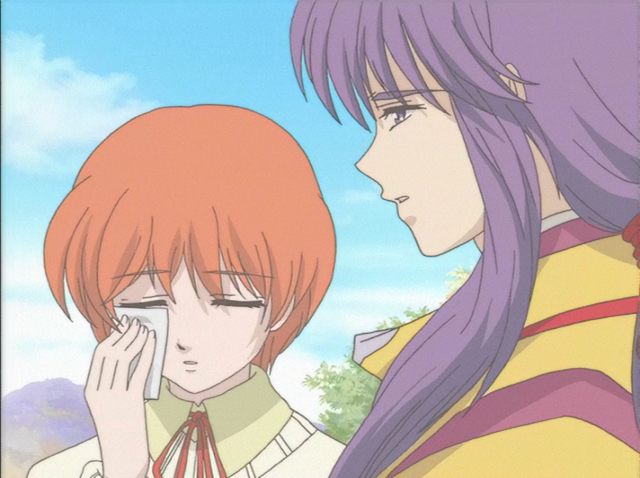
Here's a true bluebird: the 1999 one-shot OVA Arisa Good Luck. Last month, Tennouji, translator and proprietor of SakuraCircle, contacted me about doing this show. He had the DVD and a script but needed a team to do the back-end work. Would Orphan be interested? In a never-before-translated rare OVA starring the inimitable Horie Yui? You betcha! Tennouji sent over the ISO and his script, and off we went. After several viewings, maybe, just maybe, I understand what's supposed to be going on. I certainly understand why the OVA was lost in obscurity.

Nishizaka Arisa is an ordinary high school girl. She has a crush on ace basketball player Matsumoto Takayuki and decides to leave a confession note in his locker, asking him to meet her at the park after school. Her letter slips out of the locker into the briefcase of Hoshino Yuuki, delivery boy for a pizza shop named Pizza Shark. Little does she know (or care) that Pizza Shark is actually the local headquarters of an Evil Mastermind and his Minions™. The EM sends his minions to break up the date and kill Arisa in the process.

But little do they know that Arisa's siscon brother has been preparing for a confrontation with Evil. He has equipped Arisa with a magical(?) suit that turns her into a walking good luck charm. After Arisa transforms into a magi-girl, much to her embarrassment, she easily escapes every attack, knocking the Minions out in the process.

The EM is so impressed by her powers that he decides to kidnap Arisa's brother and extract the secret of the lucky suit. Arisa's brother is about to be dropped in the drink when Arisa, realizing that she'll never be able to get out of magi-girl outfit if her brother dies, shows up, ready for battle. Mayhem ensues, none of it believable, until Arisa's luck is victorious.

The seiyuu do their best with this nonsense:

  • Horie Yui (Nishizaki Arisa), affectionately known as Hocchan, needs no introduction to anime fans. She started as Tooru in the original Fruits Baskets, Naru in Love Hina, Haruka in Kurogane Communication, Catherine in Sci-Fi Harry, Sakuya in Sister Princess, Ayu in Kanon, Eri in the School Rumble franchise, Cross Yuuki in the Vampire Night series, Tsubasa Hanekawa in the *monogatari franchise, Hoozuki in Otome Youkai Zakuro, Millhiore in the Dog Days franchise, Kouko in Golden Time, and a personal favorite, Yuuko in Inukami! She starred as Suzu in Nagasarete Airantou, an Orphan release.
  • Ueda Yuuji (Shuichi, her brother) played Johannes Krauser II in Detroit Metal City (OVA), Fuuma Yousuke in Wedding Peach, Sagara Sonosuke in Rurouni Kenshin, Tenkata Akito in Kidou Senkan Nadeseico, Keitarou in Love Hina, Makoto in Futari Ecchi, and Takeshi in Pokemon. He also voiced Takagi-kun in Let's Nupu Nupu and Nanbara in Hand Maid May, both Orphan releases.
  • Ichijo Kazuya (Toujo, the villain) played Raoh in DD Fist of the North Star and Zafira in the Magical Girl Lyrical Nanoha franchise. He appeared in Kakyuusei (1995) and Doukyuusei 2, both Orphan releases, as well as other h-animes.
  • Chiba Susumi (Hoshino Yuuki, the delivery boy) played Seiji in Cutie Honey Flash, Fujiwara no Sai in Hikaru no Go, and Kondou Isao in Gintama.
  • Tsurunu Kyouko (Mirei, one of the minions) had only a few featured roles.
  • Kozakura Etsuko (Touka, the other minion) played Ryou-Ouki in the Tenchi Muyo franchise, Youhei in the Chi's Sweet Home franchise, and Nanami in the Nanami-chan franchise.
  • Ittou Miki (Toujo Maiko, the villain's wife) played Eiko in the Project A-Ko franchise, Reimi in the Burn-Up franchise, and Touko (Natsume's adoptive mother) in the Natsume Yuujinchou franchise. She appeared in Adachigahara, Chameleon, Greed, and Cool Cool Bye, all Orphan releases.

The director, Kageyama Shigenori, also directed Bavi Stock I, Hi-Speed Jecy, and Yamato 2520, all Orphan releases, as well as The Humanoid, Windaria, Kakyuusei 2, Himawari!, and numerous h-animes (under an alias).

Tennouji translated and timed. I tweaked the timing, edited, and typeset. Nemesis, Rezo, and Topper3000 QCed. Rezo encoded from Tennouji's R2J ISO. The source is a mess of blended frames, and there's not much Rezo could do about it.

Arisa Good Luck is a trifle, but any trifle starring Horie Yue has some redeeming qualities. You can get it from the usual torrent site or from IRC bot Orphan|Arutha in channels #nibl or #news on irc.rizon.net.

Tuesday, September 6, 2022

Lunatic Night 03v2

Here's an updated version of episode 3 of the late 90s h-anime comedy Lunatic Night. This version was made possible by Internet pen-pal known as ProxyMan. He's has been systematically collecting R2J DVDs of older Japanese h-anime - including most of Orphan's output in the field. Kakyuusei (1995) and Beast City 3 have been released; Lunatic Night 3 is next. There will be more (sorry).

Lunatic NIght belongs to the now-vanished category of knockabout comedy h-anime, in which the sexual hijinks are subordinated to utter silliness. (Karakuri Ninja Girl is another example.) The nominal plot is about the struggles of the lost king of Atlantis, Kanzaki, to defeat the evil machinations of a powerful otaku, Mutsuki, who wants to fill the universe with his obsessions (e.g., girls in sailor suits). In the third episode, Mutsuki's sailor-suited minions are attacking a village of Penguins in Devil Word, kidnapping the residents for nefarious purposes. Kanzaki and his servants must defeat the Sailor Suits and rescue the villagers. This involves insane mecha battles of "rock, paper, scissors" as well as (needless to say) lots of sex. Kanzaki's stamina is more than up to the challenge of satisfying the Sailor Suit girls, and everything ends happily, if inconclusively. In short, the show is completely bonkers.


Only the first two episodes of Lunatic Night were released in R1. The third episode appeared, uncensored, in R2E, but the mastering is a complete mess. So the choice is between a censored R2J source or an uncensored but frame-blended R2E source. Okizari's original release in 2014 used a random Internet raw; this release is encoded directly from the German DVD. It's still a mess. Further, it only had a German soundtrack, so the Japanese soundtrack has been interpolated from the original release.

The original translation was by Moho Kareshi; the translation checker wished to remain anonymous. I edited and typeset. CP of late lamented memory helped with QC. The encoder of the new version also wishes to remain anonymous. I've touched up the script in a few places and updated the typesetting. Otherwise, it's pretty much the same as before.

You can get Lunatic Night 3v2 from the X-rated side of the usual torrent site or from IRC bot Orphan|Arutha in channels #nibl or #news on irc.rizon.net.

Monday, August 29, 2022

Beast City (Inma Daitoshi) 3v2

sxales has recently released a new dual audio encode of the US version of the 1990's h-anime Beast City (Inma Daitoshi), which includes the first two episodes. Completing the update, here's a new version of the third episode, which was only released in Japan and is, therefore, censored and single audio.

This version was made possible by an Internet pen-pal known as ProxyMan. He's has been systematically collecting R2J DVDs of older Japanese h-anime - including most of Orphan's output in the field. Kakyuusei (1995) was the first to be released; Beast City 3 is next in line. There will be more (sorry).

The third episode of Beast City followed the first two after a considerable time lapse; perhaps that explains why it was never released in the US. It begins with a comical recap of events to date, which obviates the need to watch the first two episodes for plot continuity. (That's why everyone watches h-anime, isn't it?) Horrible alien beasts have invaded Earth and are ravishing and killing its women. Vampires from another planet previously ruined by the beasts have come to Earth to save it. Violence and sexual hijinks ensue. Well, at least it has a plot.


Okizari's original release in 2014 used a random Internet raw, encoded in DivX5, which causes playback issues these days. Moho Kareshi translated; the translation checker and timer remained anonymous. I edited and typeset.
CP of late lamented memory helped with QC. This new version is encoded from an R2J DVD by an encoder who also wishes to remain anonymous. I've touched up the script in a few places and updated the typesetting. Otherwise, it's pretty much the same as before, just shinier.

You can get Beast City 3v2 from the X-rated side of the usual torrent site or from IRC bot Orphan|Arutha in channels #nibl or #news on irc.rizon.net.


Saturday, August 27, 2022

Nana Toshi Monogatari

Here's another project that BlueFixer asked Orphan to redo: the two-part sci-fi OVA Nana Toshi Monogatari: Hokkyokukai Sensen (A Tale of Seven Cities: The Arctic Front). Released in 1992 and 1994, the OVA is based on the opening section of a novel by Tanaka Yoshiki, who also wrote other sci-fi and fantasy novels with a military theme, including Legend of the Galactic Heroes, Tytania, and The Legend of Arslan.

Nana Toshi Monogatari is set in 2190 A.D. More than a century earlier, in 2086 A.D., Earth had suffered a catastrophic realignment of its axis of rotation, basically wiping out the population. A small fraction of humanity survived in colonies on the moon (Planet B?). In 2091 A.D., the lunar colonists started resettling the Earth, founding seven city-states, based on climate, resources, and crust stability:

  • Prince Harald, in the former Antarctica
  • Buenos Zonte, in the former Amazonian rain forest
  • Tademecca, on the Niger River in Africa, now a subtropical grassland
  • New Camelot, in the former Great Britain
  • Aquir(l)onia, on the Lena River in former Siberia
  • Kunlun, on the Tibetan plateau, now fallen to 2000 meters above sea level
  • Sandara, in the former Borneo

However, to prevent any future incursions from Earth, the lunar government set up a system of military satellites to shoot down any object that flew higher than 500 meters. Then, in 2136 A.D., the lunar colonies were wiped out by a meteor-borne virus (there is no Planet B!). Earth society, bound to the planet surface by the orbiting military satellites, had to compete for supremacy the old-fashioned way: with armies and navies. And all this is set out in the first two minutes!

Now, the viewer can be forgiven for thinking this is all preposterous; an excuse for exploring warfare with early 20th century technologies. The anachronisms extend to the city settings too, with the cars all looking like survivors from the 1930s. The warships all look like classic dreadnoughts, and there is no radar.

The OVA relates the attempted invasion of Aquironia by New Camelot. The rationale for the attack is somewhat confusing. It is led by Charles Morbridge Jr, son of the former leader of Aquironia. Following his father's death, Junior's corruption was exposed, and he was forced to defect to New Camelot. Now, he wants to conquer his former homeland and become its ruler by force.

At first, the war favors the New Camelot invaders, thanks to the clever tactics of Commander Kenneth Guilford. In desperation, Aquironia dispatches its best strategist, Liu Wei, to Kunlun, to strike up an alliance for diverting New Camelot. Meanwhile, the idiosyncratic Aquironian fighter Almarick Aswaer (known as A.A.) counters Guilford with a clever riposte. However, the battle continues. Morbridge decides to lead a direct invasion of Aquironia up the Lena River, with Guilford playing a diversionary role. Guilford's diversion is unexpectedly successful.

However, he is called away to defend against the invasion from Kunlun. Meanwhile, Morbridge's direct attack is stymied by Aswaer. Morbridge flees. Aquilona is victorious. However, its leader decides that Liu Wei is too dangerous to his power. Liu Wei flees to Tademecca, taking Important Secrets™ with him. And the novel has four more major arcs.

The voice cast is sterling:

  • Yamadera Kouichi (Almarick Aswaer) played many leading roles, including Spike Spiegel in Cowboy Bebop, Sukeroku in Shouwa Ginroku Rakugo Shinju, Ryouga in all the Ranma 1/2 properties, and the nameless hero of Otaku no Seiza. He plaued the title role in Hashire! Melos, Benten in Oedo ga Nemurenai!, Happyaku in Wild 7, and Ryouan in Hidamari no Ki, all Orphan releases. 
  • Ootsuka Akio (Kenneth Guildford) played the title roles in most of the Black Jack properties, Ambassador Magma, Blade, and Montana Jones. He also played Gozo in the Aika franchise, Batou in the Ghost in the Shell franchise, the villain All for One in Boku no Hero Academia, and Nyanko Big in one memorable episode of Tada Never Falls in Love. He played George in Condition Green, the narrator in Fire Emblem, Nobunaga the boss crow in Ultra Nyan 2, Zilu in Eiyuu Banka Koushi-den, and Black Jack in Tezuka Osamu Disappears, all Orphan releases. 
  • Horikawa Ryou (Liu Wei) played Shutendou in Shuten Douji, Vegeta in Dragon Ball, Naoto in Slow Step, Anthony Brown in Candy Candy, Reinhard in LOGH, Tadao in Ghost Sweeper Mikami, Kai in Kizuna, Shinya in Okama Report, and Andromeda in Saint Seiya. He also appeared in Chameleon, Hi-Speed Jecy, Lunn no Kaze, and the first two Sangokushi movies, all Orphan releases. 
  • Yao Kazuki (Charles Corrin Morbridge Jr) played Franky in One Piece, the lead in Makyou Gaiden Le Deus, the title role in Rance, Dark Schneider in Bastard!!, Chivas in Sorcerer on the Rocks, Yoki in Fullmetal Alchemist (both versions), and Hamel in Violinist of Hamelin. He appeared as K.K. in Elf 17, Date Ikkaku in Akai Hayate, Ryougaku in Wild 7, and Sofue Akira in Boyfriend, all Orphan releases. 
  • Hisakawa Aya (Marine) has had a prolific career. She played the title roles in Mamono Hunter Youko, Voogie's Angel, and Iria: Zeiram, Skuld in the Ah! My Goddess franchise, Cerberus in Card Captor Sakura, Sailor Mercury in the Sailor Moon franchise, Yuki in Fruits Basket, Haruka in RahXephon, Youko in The Twelve Kingdoms, and Storm in X-Men. She played Shizuka in Sotsugyou: Graduation, Mishima Misako in Yume Tsukai, Shana in Al Caral no Isan, Sonia in Ziggy Sore Yuke! R&R Band, Tomoko in Sensou Douwa: Boku no Boukuugou, and Koneko in Ear of the Golden Dragon, all Orphan releases. 
  • Inoue Kikuko (Chamberlain, Guilford's executive officer) played Kasumi in Ranma 1/2, Chigusa in Kekko Kamen, Mizuho in Onegai Teacher and Onegai Twins, Yayoi in the Happy Lesson properties, Momozono Mei in Mouse, Maria in Gungrave, Emeraldas in Space Symphony Maetel, Belldandy in the Ah My Goddess franchise, Lust in Full Metal Alchemist, Goei in Ikkitousen, and the mother in the Uchouten Kazoku series. She also played Stasia in Megami Paradise, Shouta in The Girl from Phantasia, Narusawa in Doukyuusei 2, Doria in D4 Princess, and Mai in Hand Maid May, all Orphan releases. 
  • Okiayu Ryoutarou (Nicholas Broom, Duce of Aquironia) starred as Aoyama-kun in Keppeki Danshi! Aoyama-kun, Mitsui Hisashi in Slam Dunk, Matsura Yuu in Marmalade Boy, Jinnai Katsuhiko in the El-Hazard franchise, Nueno Meisuke in the Hell Teacher Nube series, the title roles in Gambler Densetsu Tetsuya and Toriko, Samejima Ranmaru in Kizuna, Souma Shigure in Fruits Basket (2003), Berserker in Fate/Zero, Hideyoshi in Sengoku Basara, and Atsushi in Recorder to Ransel. He also played Akram in Haruka Naru Toki no Nake de 2, Takao-san in Let's Nupu Nupu, Abel in Fire Emblem, and Gion in Okane ga Nai!, all Orphan releases. 
  • Sogabe Kazuyuki (Madison) played Oda Nobunaga in Black Lion, Rei Ginsei in Vampire Hunter D, Kaei in To-Y, and Meyer in Hi-Speed Jecy. The last two are Orphan releases. 
  • Koseiki Hajime (Prime Minister of New Camelot) played Michael Commando in Kosuke-sama, Rikimaru-sama: Konpeitou no Ryuu and appeared in Izumo (1991) and Akai Hayate, all Orphan releases. 
  • Nakamura Hidetoshi (Posts Minister of New Caledonia) appeared in Ai no Kusabi and Exper Zenon, both Orphan releases. 
  • Yanada Kiyoyuki (Bosswell) played Takenori in Slam Dunk, Gateau Mocha in Bakuretsu Hunter, and Kuroinu the black cat in Chii's Sweet Home. He also played Townsend Harris in Hidamari no Ki, Sesuran in Hayou no Tsurugi, Exper Venom in Exper Zenon, Kuroda in Akai Hayate, Ooniwa in Nozomi Witches, and multiple roles in Ai no Kusabi, all Orphan releases. 
  • Tsukui Kyousei (Secretary of Aquironia) appeared in many featured roles, including Cherry no Manma, Meisou-ou Border, and Call Me Tonight, all Orphan releases.

The chief director, Nagaoka Akinori, helmed Tokimeki Tonight and most of the Sore Ike! Anpanman franchise. The director, Kanbe Mamoru, also directed Elfen Lied, I"s Pure, Tegami Bachi, and Kimi to Boku.

Nana Toshi Monogatari has a lot of English, including all the signs and credits, but the transcription leaves something to be desired. For example, Aquironia was probably intended to be Aquilonia, because of its Italianate setting, and Olympos should have been Olympus; but the English signs dictated the translation.

Iri (Bluefixer) did the original and revised translation. Yogicat timed. I edited and typeset; the title screen is the only real typesetting. ImAWasteOfHair, Nemesis, and Uchuu all QCed. Intrepid encoded from a Domesday Duplicator rip of a Japanese laserdisc. The soundtrack is digital, so the audio is FLAC.

Nana Toshi Monogatari is an interesting spin on the typical sci-fi military space opera, with the admittedly mechanistic "pre-history" providing the excuse for the use of ship-to-ship naval combat as the principal means of conflict. You can get the show from the usual torrent site or from IRC bot Orphan|Arutha in channels #nibl or #news on irc.rizon.net.


Tuesday, July 19, 2022

Chameleon 5

We're seven months into a catastrophic 2022. War ranges unchecked in Ukraine. Inflation is at a forty-year high. Drought is killing the rivers in the southwestern US. The Supreme Court has taken a jackhammer to separation of church and state and to women's rights. And another episode of Chameleon is out.

Not much has changed. Pint-sized wannabe delinquent Yazawa Eisaku still tries to lord it over the hoods and girls of Narita High School. By now, his entourage accepts his pretensions either at face value or with amusement. His friend Shiina's cross-dressing brother Yu still has the hots for him. The highly dangerous Kyuu is still trying to go straight. His external rival, Matsuoka Eichi, is out of action with serious injuries received in episode 4. So the writers have to come up with new challenges, namely, younger (but still bigger) hoods from Narita Fifth Public Middle School.

The plot is predictable. The middle school students see challenging and/or killing Yazawa (who is shorter than they are) as a way of burnishing their reputations as tough guys. Yazawa tries to avoid getting sliced and diced by arranging for his friends to do the actual fighting. Even though Yazawa's plans always go awry, he gets out of dangerous situations by sheer luck or cowardly cunning and emerges with his reputation as "a man among men" intact or even enhanced. Rinse and repeat.


Chameleon reminds me of The Flashman Papers, a series of historical novels by George MacDonald Frasier. It chronicles the purported adventures of Harry Flashman (the bullying villain of Tom Brown's School Days), rake, gambler, and coward. Flashman flounders his way through Victorian England, achieving a totally undeserved reputation for bravery and dash. The series was fun at first, but the shtick quickly became repetitious and then boring. Chameleon has the same problem. Yazawa doesn't wear well as a central character. But readers know how I feel about the series by now.

I summarized the main voice cast in the blog post for Chameleon 3. Episode 5 introduces some new characters, namely, the gang leaders in Fifth Narita Middle School:

  • Miki Shinichiro (Niiya) played Kojiro in Pokemon, Fujiwara Takumi in Initial D, Urahara Kisuke in Bleach, Minamoto no Yorihisa in Haruka Naru Toki no Nake de, Shintarou in Lime-iro Senkitan, Bruce Wayne in Batman: Gotham Knight, Roy Mustang in Full Metal Alchemist (2009), Katze in Ai no Kusabi (2012), and Gintarou in Gingitstune. He also played Johnny in Jikuu Bouken Nuumamonjaa, John Bishop (the sharpshooter) in AWOL Compression Remix, Minamoto no Yoritada in Haruka Naru Toki no Naka de 2, and Cyber-X in Hand Maid May, all Orphan releases.
  • Horikawa Ryou (Kaoru) played Shutendou in Shuten Douji, Vegeta in Dragon Ball, Naoto in Slow Step, Anthony Brown in Candy Candy, Reinhard in LOGH, Tadao in Ghost Sweeper Mikami, Kai in Kizuna, Shinya in Okama Report, and Andromeda in Saint Seiya. He also appeared in Hi-Speed Jecy, Lunn no Kaze, and the first two Sangokushi movies, all Orphan releases

The director, Yotsuji Takao, also wrote the script. He was involved with many other anime series, most of them obscure.

Moho Kareshi did the initial translation. laalg and later tenkenX6 translation checked. convexity and Sunachan both tried their hands at the OP/ED song. ninjacloud timed. I edited and typeset; VigorousJammer provided valuable assistance by applying laalg's translation check. Nemesis and Uchuu did QC. The raw is an ancient Internet rip (DivX505!), but there are no signs of original media on the second-hand market in Japan. 

One note: the preview contains rapidly flashing signs, which can affect some people adversely. There's a warning in the subtitles, but it doesn't hurt to mention it again.

Chameleon was wildly popular in Japan. (I have no idea why.) The manga sold more than 30 million copies and spawned sequels, a live-action movie, and a pachinko game. You can get this penultimate episode of the OVA series from the usual torrent site or from IRC bot Orphan|Arutha in channels #nibl or #news on irc.rizon.net.

Sunday, July 10, 2022

Haruka Naru Toki no Naka de 2

Haruka Naru Toki no Naka de (In a Distant Time) is an otome game franchise developed by Ruby Party. It spans at least a dozen games and has spawned multiple anime adaptations, including a TV series, several OVAs, and a movie. Haruka Naru Toki no Naka de 2: Shiroki Ryuu no Miko (In a Distant Time 2: Priestess of the White Dragon) is a three-episode OVA from 2003-2005. It adapts the second game in the series.

Haruka Naru Toki no Naka de has been described, unkindly but not inaccurately, as "cut-rate Fushigi Yuugi." All of the anime shows begin with a modern high-school girl being whisked away to a fictionalized Heian city, where she becomes the main character in a historical, reverse-harem dating sim. Her job is to assemble a team of eight noble warriors, all bishounen (natch), and unify their power to defeat evil. All of them fall under her spell, but her feelings are never revealed. Some of the shows offer eight or more alternative endings, where the heroine ends up with one of the bishounen who have danced attendance around her.


Haruka Naru Toki no Nake de 2 is no different. Takakura Karin is summoned to Kyou (fictional Heian Kyoto) by the mysterious Akram. Kyou is consumed by rivalry between the current and former emperors, and it is Karin's responsibilities to purify the land with the help of her eight guardians:

  1. Minamoto no Yoritada, Seiryuu of Heaven
  2. Taira no Katsuzane, Seiryuu of Earth
  3. Isato, Suzaku of Heaven
  4. Akifumi, Suzaku of Earth; he is the younger brother of the current Emperor and the crown prince
  5. Fujiwara no Yukitaka, Byakko of Heaven
  6. Hisui, Byakko of Earth
  7. Minamoto no Motomi, Genbu of Heaven
  8. Abe no Yasutsugu, Genbu of Earth

The Seiryuu, Suzaku, Byakko, and Genbu are the shijin, or Four Symbols, from Chinese mythology:

  • Seiryuu, the azure dragon that guards the east. Its element is wood, its season, spring.
  • Suzaku, the vermillion bird that guards the south. Its element is fire, its season, summer.
  • Byakko, the white tiger that guards the west. Its element is metal, its season, fall.
  • Genbu, the black tortoise that guards the north. Its element is water, its season, winter.

As each bishounen rallies to Karen's side, he receives a colored jewel signifying his membership in the Hachiyou ("the eight leaves"). There are other characters too, including a pair of mystical twins, Fujiwara no Misono and Fujiwara no Yukari; Kazuhito, the half-brother of the current Emperor; and Taira no Chitose, a rival Dragon Priestess. Nominally, the story is about Kazuhito's scheme to overthrow his older brother (and the current regime) using evil spirits, but the story barely has time to get started before the OVA ends.

My association with Haruka Naru Toki goes all the way back to C1, fifteen years ago. I started doing QC on the Haruka Naru Toki no Naka de: Hachiyoushou TV series and ended up editing the last ten episodes or so. One of Orphan's first formal projects, in 2010, was cleaning up the subtitles on Haruka Naru Toki no Naka de 3: Owari Naki Unmei. In 2013, M74 and I released the first English version of Haruka Naru Toki no Naka de 2: Shiroki Ryuu no Miko, based on the AnimeFreakz R2E release. The same year, Orphan released two previous untranslated specials from the Hachiyoushou TV series. That was quite enough.

Still, I've always been a bit unhappy with the original Haruka Naru Toki 2 release. The AnimeFreakz raws had multiple encoding errors. I thought that the 25fps PAL transcription might have introduced stuttering. A few years ago, I bought the R2J DVDs and took a look at them. I was in for several surprises. First, the R2J looked utterly washed out compared to the R2E encode. Second, each episode on the R2J was about 5% longer than on the R2E. Finally, the R2J had totally different opening and ending songs. These issues delayed work on the show for a few years. Finally, I found an experienced encoder to work on it. He agreed that some color correction was needed, but not as much as the R2E encode. He explained that the time discrepancy came from the mastering method: the original NTSC 23.976fps version was played at PAL standard 25fps. This made every episode run about 5% faster. Neither of us could explain, though, why the music was changed for the R2E release. In any case, he made a new encode, I wrote a program to retime the subtitles (Aegisub would have done it, but I didn't know that), and the project was off and running.

In revisiting a show from almost ten years ago, I've tried to avoid Editor's Remorse™, but I was flabbergasted by the vast number of ellipses in the show. I dislike ellipses, yet they were everywhere. When I tried to get rid of them, I realized that they are there for a reason: most of the characters... speak... very slowly... and portentously... with long pauses... in their sentences. I can't tell whether this is poor writing or the actors trying to provide some depth to their one-dimensional characters, but I've had to leave most of the ellipses in. I was unimpressed with the R2J OP and ED as well; like the R2E songs, they are generic early ought rockers with little or no relationship to the story or the setting.

Because the cast is so large, most of the characters, other than Karin and Yoritada, don't get much screen time. Still, it's a well-known crew of seiyuu:

  • Kawakami Tomoko (Takakura Karin) starred in the titles roles for Revolutionary Girl Utena, Hikaru no Go, and Chiccha na Yuki Tsukai Sugar. She also played Chiriko in Fushigi Yuugi, Kamio Misuzu in Air, Soi Fon  in Bleach, Rosette Christopher in Chrno Crusade, Yura in Futari Ecchi, Kazuma in Detective Academy Q, Akane in Harukanaru Toki no Nake de Hachiyoushou, Youko in Tactics, Linen in Lime Iro Ryuukitan Cross, Sumi in Amaenaide yo!!, and a personal favorite, Elise the irate personal assistant in Nodame Cantabile. She also played Carrot in Waza no Tabibito and Rinko in Kigyou Senshi Yamazaki: Long Distance Call, both Orphan releases.
  • Miki Shinichirou (Minamoto no Yoritada) played Kojiro in Pokemon, Fujiwara Takumi in Initial D, Urahara Kisuke in Bleach, Minamoto no Yorihisa in Haruka Naru Toki no Nake de, Shintarou in Lime-iro Senkitan, Bruce Wayne in Batman: Gotham Knight, Roy Mustang in Full Metal Alchemist (2009), Katze in Ai no Kusabi (2012), Gintarou in Gingitstune, Johnny in Jikuu Bouken Nuumamonjaa, John Bishop (the sharpshooter) in AWOL Compression Remix, and Cyber-X in Hand Maid May. The last three are Orphan releases.
  • Seki Tomokazu (Taira no Katsuzane) played Keisuke in the Initial D franchise, Kenji in the original Pokemon, Ken in Weiss Kreuz, Kyou in the original Fruits Basket, Rentarou in Futakoi Alternative, Tanaka in Genshiken, Ryuuki in Saiunkoku Monogatari, Dee in Fake, Shinya in the Psycho-Pass properties, GIlgamesh in the Fate/Stay franchise, and Suneo in many Doraemon movies. He played Yamaoka Tetsutarou in Hidamari no Ki, an Orphan release.
  • Takahashi Naozumi (Isato) played Bunta in the Prince of Tennis franchise.
  • Miyata Kouki (Akifumi) played Suzaku no Rei in Saint Beast, Daisuke in Major, Ken in Kyou Kara Maou!, Kouta in the Baka to Test franchise, and Badger, Sea Otter, and Squirrel Mama in Shirokuma Cafe, an Orphan release.
  • Nakahara Shigeru (Fujiwara no Yukitata) played the title role in Arion, Trowa Barton in Gundam Wing, and Kurama in Kyousogiga. He had featured roles in Ziggy Sore Yuke! R&R Band, Ai no Kusabi, Dragon Fist, Dokushin Apartment Doukudami-sou, Chameleon, and Neko Neko Fantasia, all Orphan releases.
  • Inoue Kazuhiko (Hisui) starred as Yamaoka Shirou in Oishinbo, Yuki Eiri in Gravitation, the title role in Cyborg 009, and my favorite role, the irascible, sake-swilling Nyanko-sensei in the Natsume Yuujichou franchise. He also played Saiki Haruka in Tobira o Akate, Iori in Tomoe's Run!, Kanuma Hayate in Akai Hayate, Ryousuke in Daishizen no Majuu Bagi, Kitten Smith in Starship Troopers, Liu Bei Xuande in both Sangokushi TV specials, Ayako in Lunn Flies into the Wind, and Nakatsugawa in Boyfriend, all Orphan releases.
  • Hoshi Souichirou (Minamoto no Motomi) played Kira Yamato in the Gundam Seed series, Sanada Yukimura in the Sengoku Basara franchise, Eisen in Hachiyoushou, Kei in Onegai Teacher, Maebera in the Higurashi franchise, Tomoki in the Soro no Otoshimoto franchise, Son Goku in the Saiyuki franchise, Shinji in the Symphogear franchise, and Nagi in Tenjou Tenge.
  • Ishida Akira (Abe no Yasutsugu) has had a storied career. He starred as Sasuke in Samurai Deeper Kyou, Chrno in Chrno Crusade, Howard in Uninhabited Planet Survive, Rion in Galerians: Rion, Komugi in Hen Zemi, and Arima in Princess Lover. He played Gaara in the Naruto franchise, Shinichi in Nana, Athrun Zala in the Gundam Seed Destiny properties, Cho Hokkai in the Saiyuuki franchise, Xellos in the Slayers franchise, Natori in the Natsume Yuujinchou franchise, Tsukasa in the Shokugei no Souma franchise, and Kuchiki in the Genshiken series. He played brother Oomori in Let's Nupu Nupu and Gordon in Fire Emblem, both Orphan releases.
  • Okiayu Ryoutarou (Akram) starred as Aoyama-kun in Keppeki Danshi! Aoyama-kun, Mitsui Hisashi in Slam Dunk, Matsura Yuu in Marmalade Boy, Jinnai Katsuhiko in the El-Hazard franchise, Nueno Meisuke in the Hell Teacher Nube series, the title roles in Gambler Densetsu Tetsuya and Toriko, Samejima Ranmaru in Kizuna, Souma Shigure in Fruits Basket (2003), Berserker in Fate/Zero, Hideyoshi in Sengoku Basara, and Atsushi in Recorder to Ransel. He also played Takao-san in Let's Nupu Nupu, Abel in Fire Emblem, and Gion in Okane ga Nai!, all Orphan releases.
  • Ootani Ikue (the Fujiwara twins, who support Karin) provided the voice of Pikachu in in the Japanese, English, Spanish, and German versions of the Pokemon shows. She also played Mitsuhiko in the Detective Conan franchise and Tony Tony Chopper in the One Piece franchise. She appeared as Ann in Next Senki Ehrgeiz and Sumire in Kiss wa Mi ni Shie, both Orphan releases.
  • Asakawa Yuu (Kazuhito) starred as Kasumi in Seraphim Call, Rei in Shin Hakkenden, Nagi in the original Boogiepop, Motoko in Love, Hina, Sakiki in Azumanga Daioh, Jura in Vandread, Tachibana in the two Gravion series, and Rider in the Fate/Stay franchise.
  • Ishii Kouji (Minamoto no Tokitomo, Kazuhito's right-hand man) played Fujisawa in the El Hazard franchise, Taiga in the GaoGaiGar franchise, Mitsukake in the Fushigi Yuugi franchise, John Blade in Sin: The Movie, Tanaka in Kachou Ouji: Hard Rock Save the Space, and Garterbelt in Panty & Stocking with Garterbelt. He also appeared as Henry Hellgate in Alice in Cyberland, and Hyman in Fire Emblem, both Orphan release.
  • Kuwashima Houko (Taira no Chitose) played the title role in Kamikaze Kaitou Jeanne and Arete-Hime and starred as Sango in Inuyasha, Aoi in Infinite Ryvius, Marlene in Blue Gender, Margaret in Madlax, Kou Shuurei in the Saiunkoku Monogatari series, Yuuko in Dennou Coil, Chizuru in the Hakuoiki properties, and Warp in Kaiba. She appeared in Sensou Douwa: Aoi Hitomi no Onnako no Ohanashu and Yume Tsukai, both Orphan releases.
  • Kawamura Maria (Shirin, the dancer) played Naga the Serpent in the Slayers franchise, the title role in Fujiko Fujio A no Mumako, Eluza in the Gall Force OVAs, Interpreter in the Compiler OVAs, Luna and Tiger Lily in Peter Pan no Bouken, and Kate in Hitomi no Naka no Shounen: 15 Shounen Hyouryuuki, an Orphan release.
The actors appeared in many of the other Haruka Naru Toki shows and many video games as well. The director, Tsunaki Aki, directed several other Haruka Naru Toki shows.
 
For the original release, M74 translated and timed, starting with the German language subtitles. laalg translation checked and corrected the subtitles from the Japanese audio. I edited and typeset (not much). CP and Saji QCed the original scripts. For this version, Intrepid ripped the Japanese DVDs, and an encoder who wishes to remain anonymous encoded the new raws. Yogicat tweaked the timing. ImAWasteOfHair did a release check. There's really no solution to the mastering issues. There are 29.97fps signs and foreground animation overlaid on 23.976fps anime. The encoder's solution was to encode at 59.94fps, which seems to minimize interlacing and frame blending issues. YMMV.
 
Because of the different OP/ED songs, this version of Harunka Naru Toki no Nake de 2 supplements rather than replaces the R2E version. Script changes have been minimal; you can watch either one. However, the original is finished 5% sooner, and some people will certainly count that as an advantage. You can get this new version from the usual torrent site or from IRC bot Orphan|Arutha in channels #nibl or #news on irc.rizon.net.


Saturday, June 25, 2022

Hayou no Tsurugi

Hayou no Tsurugi was a series of forty (!) light novels by Maeda Tomiko, published between 1989 and 2017. (A spinoff series, Hayou no Tsurugi Gaiden, ran to another eleven volumes.) In 1992, the first volume was adapted into a two episode OVA, Hayou no Tsurugi: Shikkoku no Mashou (The Demon-Breaking Sword: The Jet Black Demon). Like many OVA teasers for works in other media, it never crossed the Digital Divide; in fact, it was never released on laserdisc. Orphan is now releasing the first English-subtitled version, ripped from Japanese VHS tapes.

Hayou no Tsurugi is set in Gandal Arith, your typical sword-and-sorcery world of humans and demons. The floating fortress of Fujou is home to demon-breakers and others who fight demons. This includes a young woman named Laethreel (Lath), who has been chosen by the bloodthirsty demon-breaking sword Gurenki as its master. Laethreel yearns for suitable adventures, but she doesn't have a "protector" or friendly youkai; without that, she'd be unable to fight truly powerful demons.

This all changes at the start of the story. First, a young man calling himself Anshu (he's actually a youkai) shows up out of nowhere, swearing to be Laethreel's protector.

Then the "jet black demon" Aju kidnaps Princess Shurain of Gandia, with the intention of forcing her into marriage. The royal family commissions Laethreel to retrieve Shurain from her captor. Then the complications begin.

Laethreel is actually Shuraku, the hybrid offspring of a demon father and a human mother. When unleashed, her "entrancing eyes" have the power to bewitch both humans and demons. She also has a brother, Leedyle, a hybrid as well. Shuraku rejected her demon heritage and wants to be known only as Laethreel. Leedyle, on the other hand, rejected his human heritage and wants to be known only as Lord Ranka. He'd be happy to see Laethreel dead, provided he can obtain the power of her "entrancing eyes." Their clash will be the motivating spring of the early novels, as well as the OVA.

With all the aliases, you can't tell the players, or their seiyuu, without a program:

  • Tsuru Hiromo (Laethreel/Lath/Shuraku) debuted as Perrine in Perrine Monogatari. She went on to play Kashima Miyuki in Miyuki, Madoka in Kimagure Orange Road, and Mikami Reiko in Ghost Sweeper Mikami. She also played Sarah in Mother Saigo: Shoujo no Eve, Sonnet Barge in Blue Sonnet, Fengji in the third Sangokushi movie, Keiko in Hiatari Ryoukou, Nozomi in Nozomi Witches, Jill in A Penguin's Memories, UFO-chan in Dokushin Apartment Dokudami-sou, Milk in Karuizawa Syndrome, and big sister Shizuka in Tomoe's Run!, all Orphan releases.
  • Hironaka Masashi (Anshu) played Bird Torigai in Blue Sonnet, Jiro in Karuizawa Syndrome, Ihika in Yousei-Ou, Kanou in Nine, Kazusa in Tomoe's Run!, and the hijacker in Stop!! Hibari-kun!, all Orphan releases, as well as Siegfried in Legend of the Galactic Heroes.
  • Kusao Takeshi (Leedyle/Ranka) played the lead roles in Junk Boy and Fujilog, the title role in Babel II, Trunks in the Dragon Ball Z franchise, Sakuragi in Slam Dunk, Lamune in NG Knight Lamume & 40, the teenaged Tezuka Osamu in Tezuka Osamu Monogatari, Daichi in Singles, the fast talking orca in Sensou Douwa: Chiisai Sensuikau ni Koi wo Shita Dekasugira Kojira no Hanashi, and the icy director Kurume Kenjirou in Smash Hit!; the last four are Orphan releases. He is still active, appearing in the recent Major 2nd.
  • Hayami Shou (Aju) starred as Nanjou in Zetsuai: 1989 and Bronze: Zetsuai since 1989, and Kushinige Hodaka in Oshare Kozou wa Hanamaru. He also played an angel in Tezuka Osamu's Tales of the Old Testament, Exper Kain in Exper Zenon, Iason's friend Raoul in Ai no Kusabi, Hojo in Sanctuary, Pat Leivy in Starship Troopers, Junoichi in Blazing Transfer Student, Shargan in Gude Crest, and Seichii in Mikoneko Holmes. All of these shows are Orphan releases.
  • Tsuboi Akiko (Mensuran) had featured roles in numerous shows, incuding Perrine Monogatari, Heidi Girl of the Alps, Lucy of the Southern Rainbow, Galaxy Express 999, Miyuki, Saint Seiya, and Nausicaa.
  • Shinohara Emi (Lady Manthrum, Laethreel's foster mother and Queen of Gandia) played B-Ko in the A-ko properties and Sailor Jupiter in the Sailor Moon franchise. She appeared as Yuri Onagara in Blue Sonnet, vulgar daughter Stephanie in Eguchi Hisashi no Kotobuki Gorou Show, Reiko in Akai Hayate, and Android 1025 in Oz, all Orphan releases.
  • Kasahara Hiroko (Princess Shurain) played the title roles in Armitage III and Mahou Angel Sweet Mint, Maron in Assemble Insert, Nanako in Dear Brother, Ami in DNA^2, Fuu in the Rayearth properties, Tama in the Tama and Friends franchise, and Hinako in Ultimate Teacher. She starred as Seara in Baby Love, an Orphan release.
  • Yara Yuusaku (Narrator/King of Gandia) played the destroyer captain in Zipang. He had many featured roles, appearing in Eguchi Hisashi no Kotobuki Gorou Show, Eguchi Hisashi no Nantoko Narudesho, Next Senki Ehrgeiz, Eien no Filena, Hidamari no Ki, Nozomi Witches, both Sangokushi OVAs, Prime Rose, the second Sangokushi movie, and both What's Michael? OVAs, all Orphan releases.
  • Yanada Kiyoyuki (Sesuran, a demon-breaker in Fujou) played Exper Venom in Exper Zenon, Kuroda in Akai Hayate and Ooniwa in Nozomi Witches, all Orphan releases. He also played Black Bear Cat in Chii's Sweet Home.
  • Tano Megumi (Satin, Laethreel's friend) appeared in Dragon Fist, an Orphan release, as well as Monkey Magic, Raven Tengu Kabuto, Samurai 7, and Genbanojou.

The director, Shibuichi Setsuko, also directed several of the Urusei Yatsura OVAs, as well as Yuukan Club, Ichigatsu no Christmas, and the 1994 version of Chuumon no Ooi Ryouriten.

Some terminology notes:

  • binder - hobakushi, or capture master
  • demon breaker - hayou no kenshi, demon-break swordmaster
  • entrancer - mibakushi, or charm capture master
There's a lot more in a 40-volume novel series, but that's enough for now.

Iri translated. ninjacloud timed. I edited and typeset (very little). Topper3000, Uchuu, VigorousJammer, and (new to Orphan) ImAWasteOfHair QCed. Intrepid encoded from a Japanese VHS tape. The tape had copy protection, which caused problems during the ripping process and may have contributed to audio sync issues in the encode.

Although Hayou no Tsurugi ends at a reasonable stopping point, it will, like most teaser OVAs, leave you wanting more. Unfortunately, the novels are not available in English. You can get the anime from the usual torrent site or from IRC bot Orphan|Arutha in channels #nibl or #news on irc.rizon.net.